Getting young children to sit still for traditional flashcards is nearly impossible. If you want to teach early music concepts without the boredom, the secret is to turn abstract symbols into physical playtime. By using 5 fun music theory games for kids, you can effortlessly teach rhythm, note names, and the musical alphabet right on your living room floor.
Here are five highly engaging, interactive games that turn music theory into your child’s favorite part of the day.
What are the best music theory games for kids? The best music theory games for kids are interactive, physical activities that teach abstract concepts through play. Top games include Musical Alphabet Hopscotch for note sequencing, Rhythm Copycat using clapping patterns, and The Key Hunter Game for identifying piano keyboard layout geography.
Game 1: The Musical Alphabet Hopscotch
The musical alphabet only goes from A to G, but kids often get confused because it loops backward and forward. This game builds instant memory tracking.
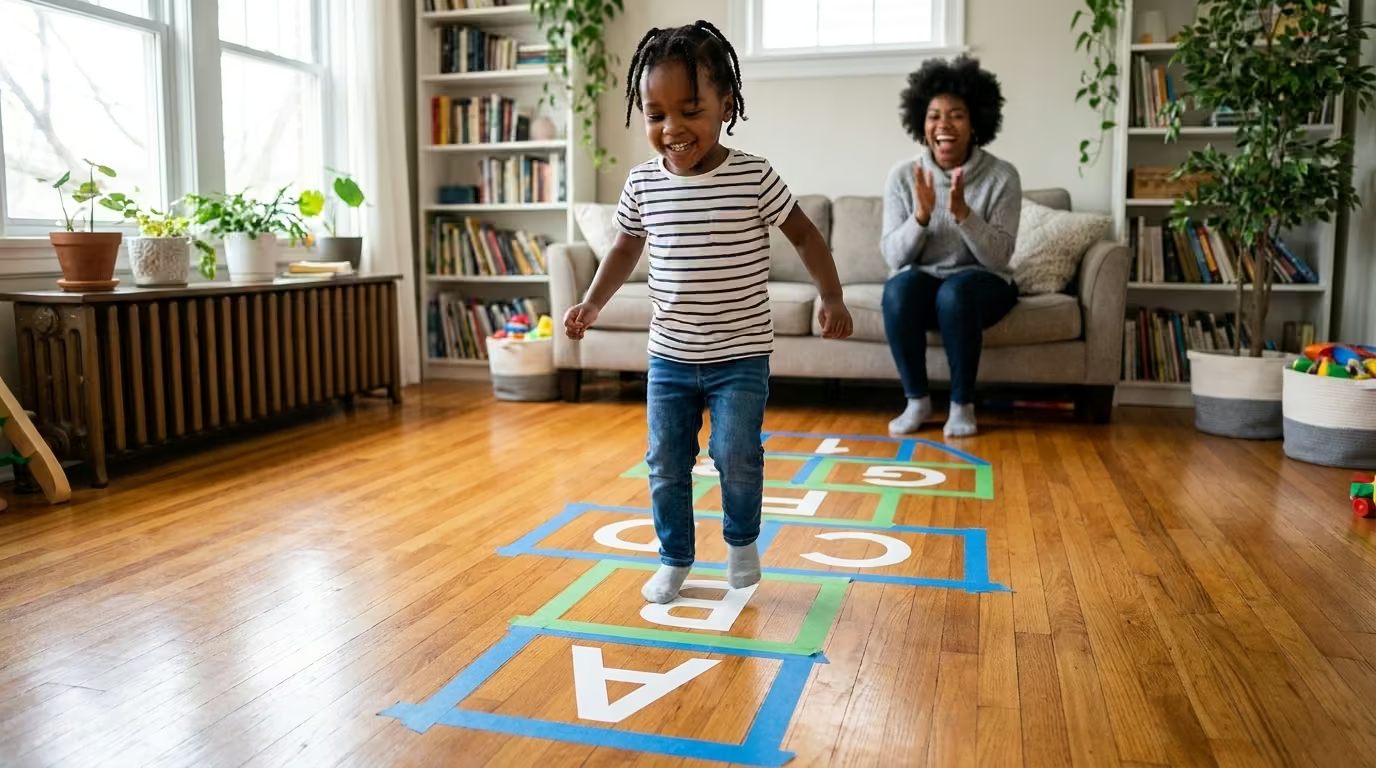
- How to Play: Use sidewalk chalk outside or pieces of paper indoors to create a standard hopscotch grid labeled A – B – C – D – E – F – G.
- The Rule: As your child hops onto each square, they must call out the letter sound out loud. Once they master jumping forward, have them try jumping backward (G to A) to master descending scales!
Game 2: Rhythm Copycat (With Action Words)
This game builds physical rhythm coordination without forcing a child to read complex mathematical sheet fractions.
- How to Play: Sit facing your child. Tell them you are the leader and they must copy your exact clapping pattern.
- The Rule: Use action words to set the length. Clap a steady beat while saying “Walk, Walk” (Quarter notes), or clap quickly while saying “Running, Running” (Eighth notes). Have them echo the claps and the words back to you instantly.

Game 3: The “Doghouse” Key Hunter
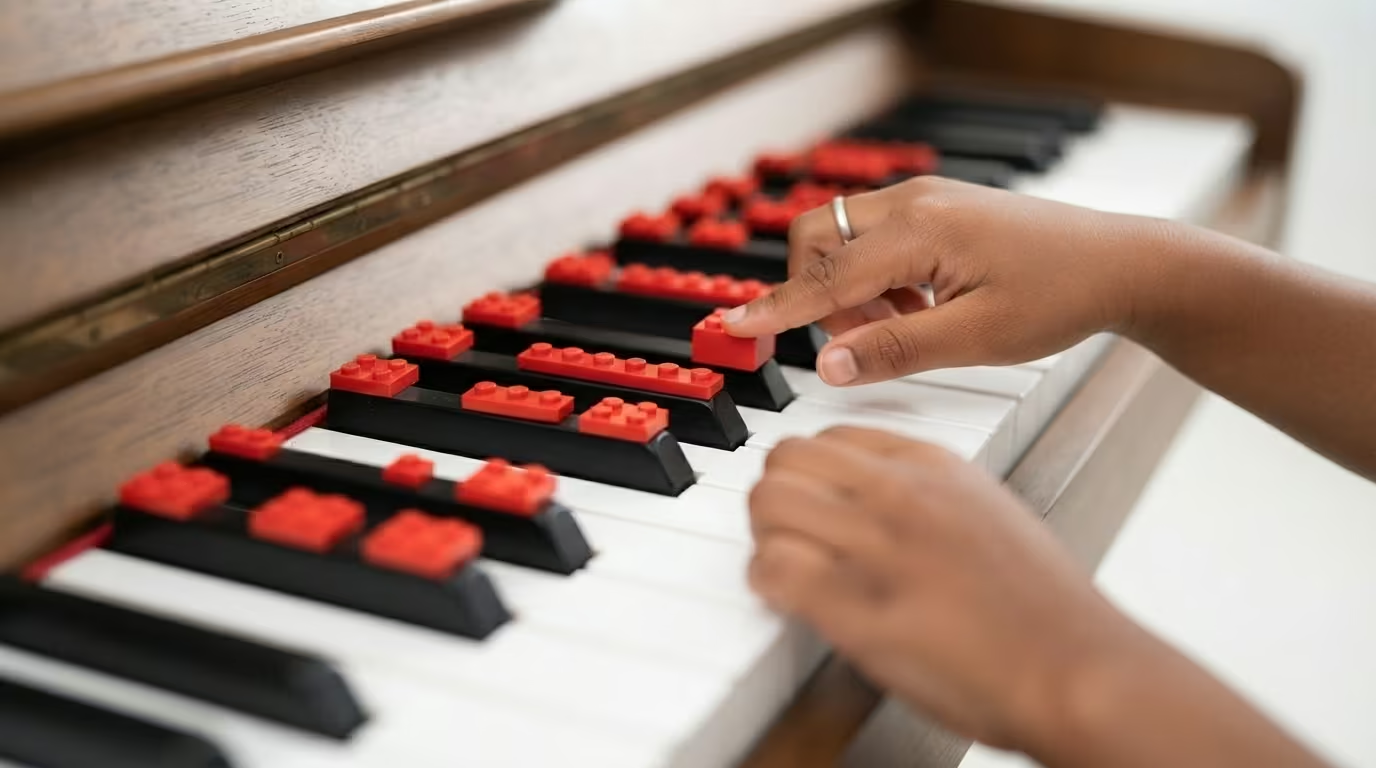
This game reinforces keyboard layout geography and prepares your child’s eyes to locate individual white notes instantly.
- How to Play: Grab a handful of small toy coins, buttons, or Lego bricks.
- The Rule: Set a timer for 60 seconds. Challenge your child to place a toy coin inside every single “Doghouse” (the groups of two black keys) across the entire piano keyboard before the timer runs out.
Game 4: Musical Staff Twister
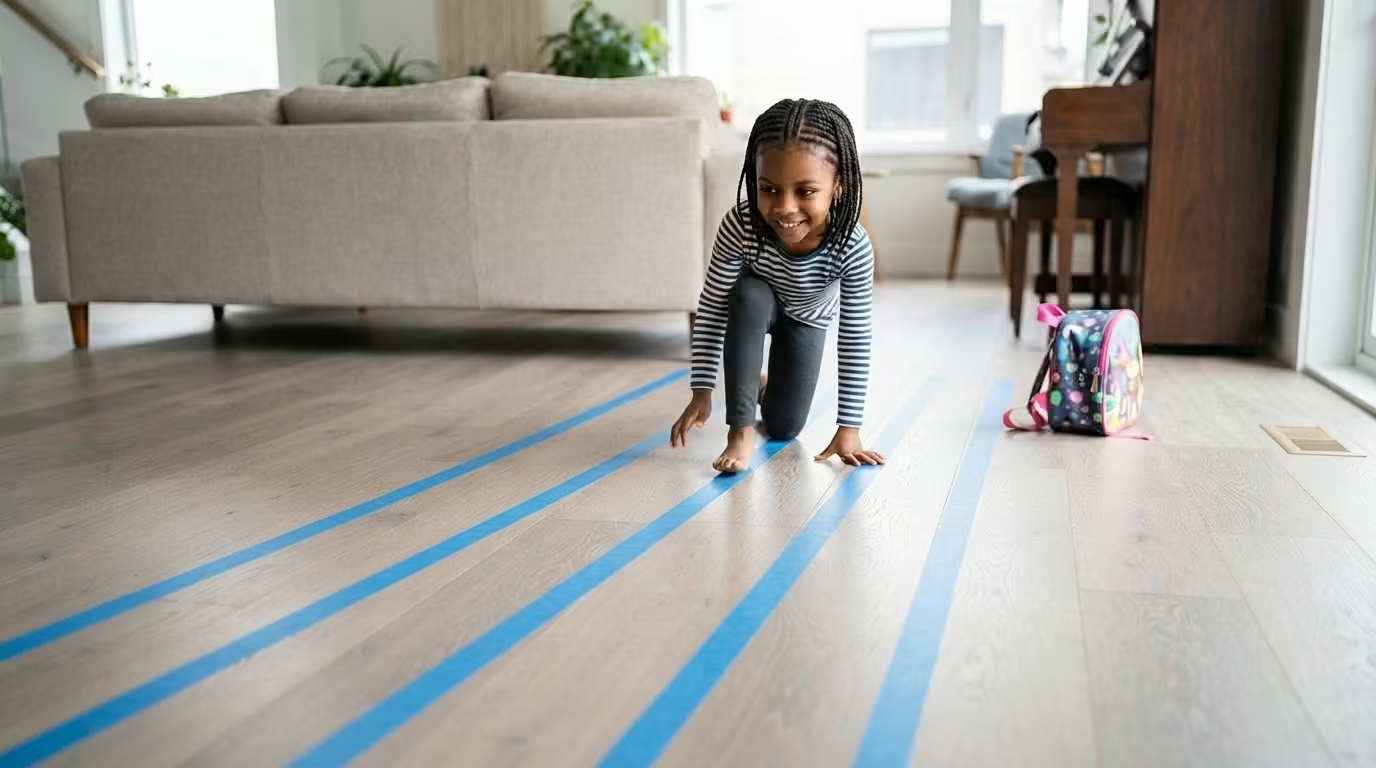
This giant floor game helps kids visualize lines and spaces on a traditional music staff.
- How to Play: Tape 5 long lines of colored painter’s tape across your living room floor to create a giant musical staff.
- The Rule: Call out instructions like: “Put your left foot on a LINE!” or “Put your right hand in a SPACE!” This transforms reading music from a visual strain into a physical body map.
Game 5: Loud & Soft Animal Mimic (Dynamics)
In music theory, volume is called “dynamics” (Piano vs. Forte). This game teaches vocal and physical sound control.
- How to Play: Hold up a card or symbol. When you hold up a Big Circle (Forte), your child must stomp and speak like a loud lion.
- The Rule: When you lower your hand or show a Tiny Circle (Piano), they must instantly drop their volume and whisper like a tiny mouse. This establishes intuitive control over musical volume changes.